



13 Apr Dance Floor Size By Guest Count Guide
A dance floor size by guest count guide helps you choose a floor that fits the way your event will move, gather, and feel once guests arrive. At Chairs4AllEvents, dance floors are part of a wider event setup that can include chairs, tables, décor, and layout planning, so the floor size should match both your guest count and the way the room will be used. When the size is right, the floor feels inviting without taking over the space.
Choosing a dance floor is not only about the total number of guests on your list. It also depends on how many people are likely to dance at the same time, where the floor will sit in the room, and what kind of event format you are planning. A wedding reception with a full dance set may need a different approach than a party where dancing happens in shorter bursts through the night.
How Sizing Works
The simplest way to start is by using the site’s own guideline. Chairs4AllEvents shares a dance floor size chart in its FAQ that matches floor dimensions to the number of people the floor can fit at one time. That gives you a clear starting point before you look at venue shape, nearby tables, or traffic flow.
The company’s dance floor product page also notes that the Black & White Vinyl Dance Floor comes in 3x3FT pieces. That matters because the final size is built from sections, so the floor can be matched to the layout you are planning. It also means the size decision should be made with the room dimensions in mind, not only the guest total.
Dance Floor Size By Guest Count Examples
Chairs4AllEvents provides this guideline for dance floor size by guest count in its FAQ. A 12 x 12 floor using 16 pieces fits 24 people. A 12 x 15 floor using 20 pieces fits 30 people. A 15 x 15 floor using 25 pieces fits 40 people. A 21 x 21 floor using 49 pieces fits 90 people. That gives you a practical way to compare the room you have with the crowd you expect on the floor at once.
These numbers are useful because they keep the sizing conversation grounded. Instead of guessing based on the full event headcount, you can think about active use. Not every guest will be dancing at the same moment, so the right size is usually based on the dancing crowd, not the total attendance. That can help you avoid booking a floor that feels either too tight or too empty.
Reading The Guest Count
Guest count is still the first number to review, but it should be read in context. If your event has a packed dance-heavy format, more people may head to the floor at once. If the evening includes dinner, speeches, lounge time, or scattered entertainment, the floor may stay active in smaller waves. That is why dance floor size by guest count works best when paired with a realistic view of how the event will unfold.
It also helps to think about who the floor is for. A wedding with a central open dance set may bring in a larger group at once than a corporate event where guests move between tables, the bar, and conversation areas. Once you know the likely crowd on the floor at one time, the site’s size chart becomes much easier to use.

When To Size Up
There are times when sizing up makes sense even if the chart suggests a smaller floor. If dancing is the main focus of the event, a little extra space can help the floor stay comfortable. The same applies if the dance floor is going in a room where guests will gather around the edges and then step in as the night builds.
You may also want to size up if the room has a wide open layout and the floor needs to hold its own visually. A larger floor can help anchor the event space, especially if it is placed near the center of the reception area. In those cases, dance floor size by guest count is still the base, but layout planning may support the next size up.
When To Size Down
Sizing down can also make sense in the right setting. If dancing is only one part of the event and the room needs more space for dining, lounge furniture, or décor features, a smaller floor may fit the flow better. A floor that matches the actual dancing crowd can feel fuller and more inviting than one that looks oversized for the room.
This can also apply when the venue has fixed layout limits. If the floor has to sit between tables, near a stage area, or inside a narrower reception footprint, keeping the floor slightly tighter may help traffic move more naturally around it. The goal is not just fitting dancers onto the floor. It is making the whole room work together.
Placement And Traffic Flow
Placement affects how a dance floor performs once the event begins. A floor that is tucked too far from the main activity may feel disconnected, while one placed right in the middle of a busy path can create congestion. It helps to think about the floor as part of the room’s movement. Guests should be able to reach it easily without blocking service paths or major walkways.
Bar proximity, table layout, and the route from the main seating area all matter here. If the floor is easy to see and easy to step onto, it is more likely to stay active. If it is boxed in by furniture or squeezed into a corner, it may feel smaller than it really is. Good layout planning can make the same floor size work better without changing the piece count.
Surface Prep Matters
Surface prep should be part of the decision from the start. Chairs4AllEvents states on the product page that its Black & White Vinyl Dance Floor can only be erected on a level surface. That is one of the most important notes on the site because it affects both placement and booking decisions. Before finalising the size, make sure the venue surface is suitable for the floor you want.
This matters for indoor and outdoor setups alike. Indoors, you need to know where the floor will sit and whether that area is flat and clear. Outdoors, the same level-surface rule should guide the conversation before the order is placed. A good size recommendation only works when the floor has the right surface beneath it.
Dance Floor Size By Guest Count And Room Layout
Dance floor size by guest count should always be checked against the room layout before booking. The chart tells you how many dancers a floor can hold, but the venue dimensions tell you whether that floor actually belongs in the space. A floor can fit the crowd on paper and still feel awkward if it blocks circulation or leaves too little room for tables and décor.
That is why venue dimensions are useful so early in the process. Once you know the floor size you are considering, you can look at aisle clearance, table spacing, nearby focal points, and how the dance area connects to the rest of the setup. The floor should feel like part of the room, not like something dropped into the last open spot.
Booking And Delivery Timing
Booking timing matters because the dance floor is part of the wider event setup, not a standalone detail. Chairs4AllEvents states that delivery and pick-up are between 9:00 AM and 4:00 PM Monday through Friday on open business days. The company also notes that there are additional service options for priority routing, timed windows, and service outside regular business hours. Those details should be checked against your venue access time before you settle on the plan.
It also helps to remember that delivery pricing assumes ground-level access where the truck can park, and extra charges can apply if items need to be carried beyond that point. Since dance floor placement depends on room layout and surface conditions, it is worth thinking through access, route, and final position before the order is confirmed.
A Simple Planning Check
Before booking, confirm how many guests are likely to dance at one time, review the site’s size chart, measure the available floor area, and check that the chosen location has a level surface. Then look at how the floor will sit beside tables, décor, and the bar so guests can move through the room without crowding the edges.
This is also the right moment to gather your delivery details. If the venue has a narrow access window or a setup area far from parking, those points should be sorted out early. The size of the dance floor matters, but so does the way it arrives, fits, and functions within the event space.
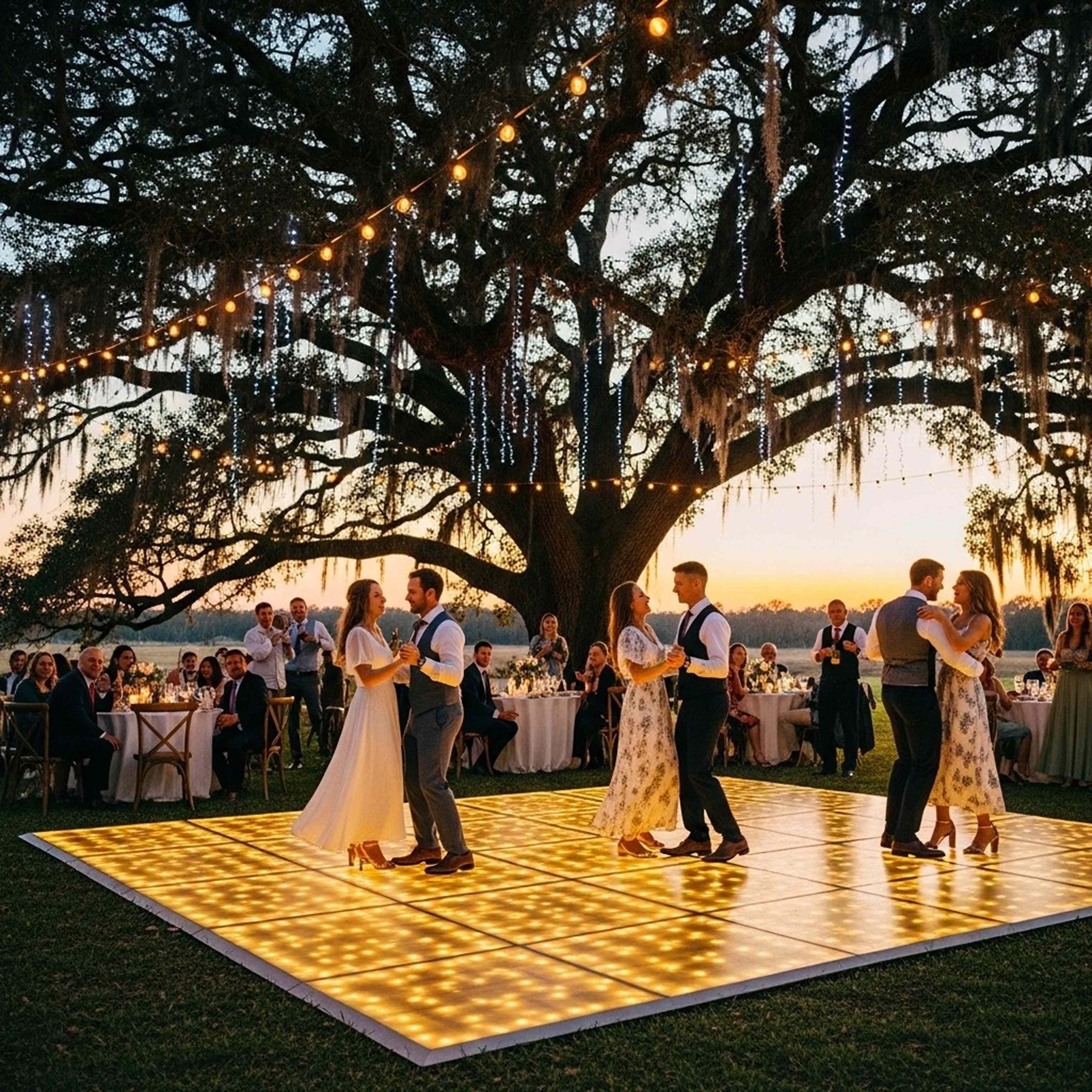
Dance Floor Size By Guest Count FAQ
How Does Dance Floor Sizing Work For Events
Dance floor sizing works by matching the floor dimensions to the number of people expected to use it at one time, not only the full guest list. Chairs4AllEvents provides a size chart in its FAQ that links floor dimensions and piece counts to the number of dancers each floor can fit. That gives you a clear baseline before you look at the room layout, event format, and access details.
What Is The Site Guideline For Dance Floor Size By Guest Count
The site guideline from Chairs4AllEvents lists four main examples. A 12 x 12 floor with 16 pieces fits 24 people. A 12 x 15 floor with 20 pieces fits 30 people. A 15 x 15 floor with 25 pieces fits 40 people. A 21 x 21 floor with 49 pieces fits 90 people. These examples are a useful starting point when you are deciding which size belongs in your event space.
When Should I Go Bigger Or Smaller
Going bigger can make sense if dancing is a major part of the event or if the room is open enough for the floor to act as a central feature. Going smaller can work when dancing will happen in shorter waves or when the room needs more space for dining and guest movement. The best choice comes from using the guest-count guide alongside layout planning instead of relying on guest total alone.
What Surface Does The Dance Floor Need
Chairs4AllEvents states on its product page that the Black & White Vinyl Dance Floor can only be erected on a level surface. That means surface prep should be checked before the order is placed. Whether the event is indoors or outdoors, the chosen area needs to be flat enough for safe setup and use. Surface planning should happen before size selection is final.
What Should I Confirm Before Booking Delivery
Before booking delivery, confirm your venue dimensions, the floor location, the setup surface, and the venue access window. Chairs4AllEvents states that delivery and pick-up take place during set business hours, with added options available for timed windows and after-hours service. The company also notes that extra charges can apply when items must be carried beyond the truck parking area, so access details should be reviewed early.
Dance Floor Size By Guest Count Next Steps
If you are comparing options now, use the site’s chart as your starting point and then match it to your room layout, floor surface, and event format. A good dance floor size by guest count choice should feel right for the crowd and the space, not just one or the other.
No Comments